
A common misconception is that a wallet is mainly a place to store tokens and approve transactions. In practice, a modern DeFi wallet is closer to a decision interface for a distributed financial system. It must help you understand what you own, what a proposed transaction will change, and which risks remain invisible even after a transaction appears technically valid.
That distinction matters in the United States, where a single user may move assets across Ethereum and several EVM-compatible networks, interact with decentralized exchanges, lending protocols, bridges, staking contracts, and non-fungible token markets. Portfolio tracking describes the past and present state of those activities. Transaction simulation estimates a possible future state. Risk assessment asks whether the difference between the two is acceptable. These are related functions, but they are not interchangeable.
From balance display to decision support
Early crypto wallets largely answered one question: how many units of a token are associated with an address? That was useful when activity meant receiving, holding, and sending assets. DeFi changed the problem. A user can deposit tokens into a lending market, receive a position token, borrow against collateral, provide liquidity, lock assets in a contract, or hold an asset whose economic value depends on another protocol.
A simple token balance can therefore understate or misrepresent exposure. The wallet address may show a small amount of a base asset while the user controls a much larger economic position through smart contracts. Conversely, a displayed token balance may not reveal withdrawal restrictions, liquidation conditions, impermanent loss, protocol dependencies, or the fact that an asset is difficult to sell at its quoted price.
This is why portfolio tracking should be understood as exposure mapping rather than mere accounting. A useful tracker groups assets by network, token, protocol, and position type. It should help answer questions such as: What is the total value at risk? Which assets are collateral? How much depends on one bridge or stablecoin? Which positions can be exited immediately, and which require several transactions or favorable market conditions?
Portfolio tracking versus transaction simulation
Portfolio tracking is retrospective and state-oriented. It attempts to represent the current or historical condition of an address. Transaction simulation is prospective and change-oriented. It runs a proposed transaction against an estimated blockchain state to show likely effects before the transaction is signed or broadcast.
Consider a swap. A basic interface might show the token you intend to spend and the token you expect to receive. A simulation can provide a more useful question: after execution, what assets will leave the wallet, what assets will arrive, which approvals may be created, and what contract calls are involved? In a more complicated interaction, the transaction may include several internal steps that are not obvious from the top-level button.
The important conceptual distinction is between what the wallet currently contains and what the proposed call is authorized to change. A portfolio view can tell you that you own a valuable token. Simulation can help reveal whether a contract call is attempting to transfer that token, grant an unlimited allowance, or alter a position. Neither view is complete alone.
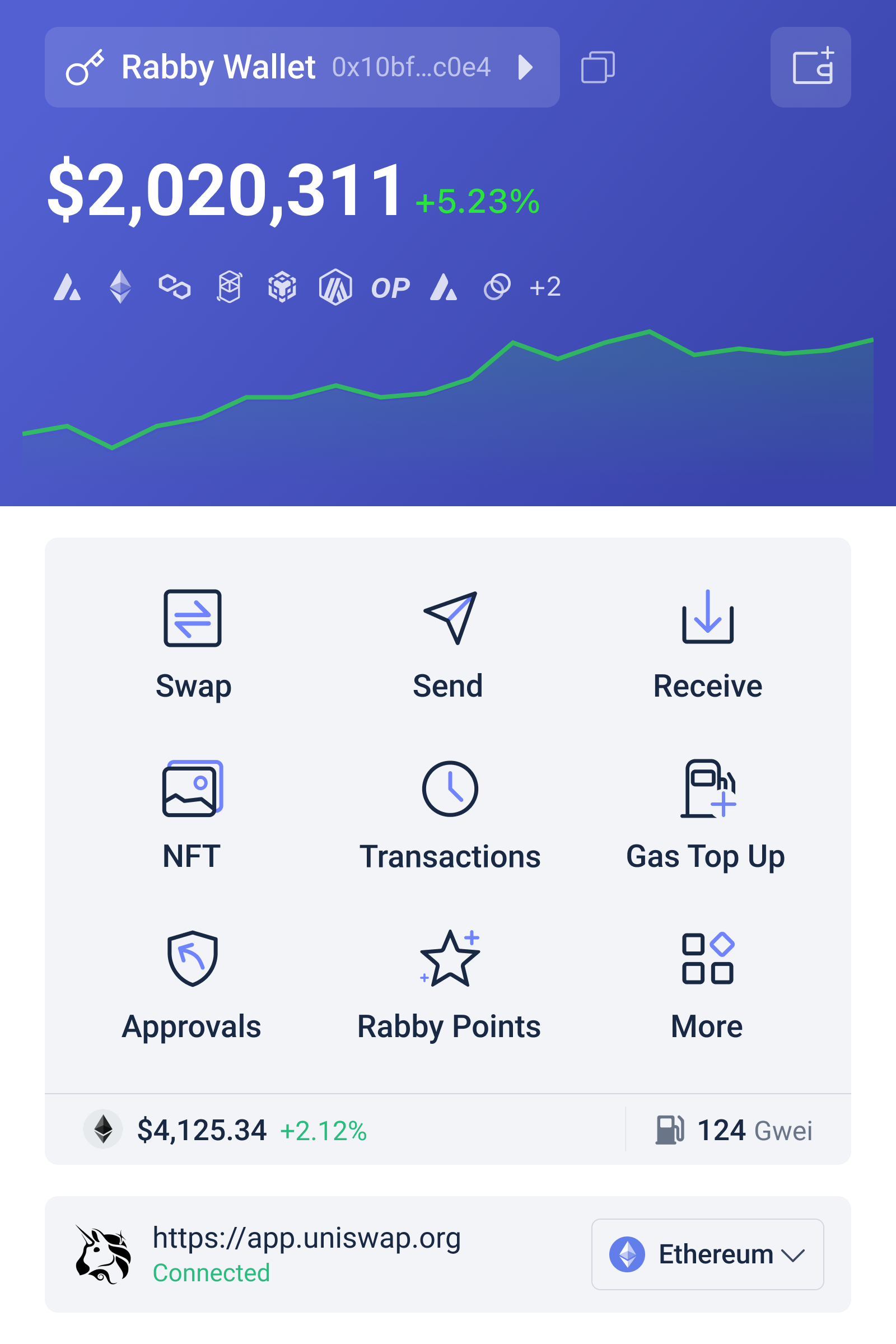
For users who want an interface designed around on-chain activity across Ethereum and EVM networks, a rabby wallet can be evaluated through this combined lens: not simply as a signing tool, but as a layer that makes proposed state changes easier to inspect before approval.
What simulation can detect—and what it cannot
Simulation is powerful because smart-contract transactions are executable programs, not static payment instructions. A simulator can often identify expected asset transfers, contract interactions, token approvals, estimated gas effects, and whether a call is likely to revert under the simulated conditions. This creates a valuable pause between intention and authorization.
That pause addresses a frequent user error: interpreting a familiar button as evidence of a familiar outcome. A button labeled “claim,” “stake,” or “mint” describes an interface intention, not necessarily every operation encoded in the transaction. The contract may call another contract, rely on a particular recipient address, or request permissions that persist after the immediate action.
Yet simulation is not a guarantee. It is a model of a transaction under a particular state, block context, and set of assumptions. Conditions may change between simulation and inclusion. A price may move, liquidity may disappear, a protocol may be manipulated, or a transaction may depend on ordering relative to other transactions. Some threats are also semantic rather than computational: a malicious contract can execute exactly as simulated while producing an economically harmful result.
This boundary is crucial. Simulation can answer, with varying confidence, “What is this transaction likely to do?” It cannot independently answer, “Is the protocol trustworthy?” or “Is this asset fairly valued?” A clean simulation is evidence about execution behavior, not a certification of code quality, governance, solvency, or market integrity.
Risk assessment requires more than a warning color
Wallet warnings are useful when they focus attention, but risk assessment works better as a layered process. The first layer is transaction risk: unexpected recipients, unusual approvals, suspicious contract behavior, or a mismatch between the intended action and the simulated result. The second is protocol risk: bugs, upgrade authority, oracle dependence, governance concentration, and the possibility that withdrawals or liquidations behave differently under stress.
The third layer is market risk. A position can be technically secure and still lose value because of volatility, thin liquidity, correlation between collateral and debt, or a stablecoin losing its intended price relationship. The fourth is operational risk: using the wrong network, signing from the wrong account, exposing a seed phrase, or relying on a browser environment that has been compromised.
These layers interact. A bridge may be reputable but create concentration risk if most of a portfolio depends on one cross-chain mechanism. A lending position may appear healthy until collateral and borrowed assets fall together. A token approval may be harmless when unused, but materially increase future exposure if a contract later becomes compromised. Risk is often produced by combinations, not by one visibly dangerous action.
A practical comparison of three approaches
Manual inspection
Manual inspection offers maximum control for a technically experienced user. One can review the chain, contract address, allowance, calldata, expected output, and protocol documentation. The weakness is cognitive load. It is slow, easy to perform inconsistently, and vulnerable to social engineering or interface deception. Even knowledgeable users can miss an important detail when several transactions are bundled together.
Portfolio dashboards
Dashboards are strong at orientation. They make fragmented holdings visible and can reveal concentration, inactive approvals, protocol exposure, and changes in net worth across networks. Their weakness is timing and interpretation. Prices may be delayed or based on limited liquidity, positions may be classified imperfectly, and a dashboard may not capture every contractual obligation. A clean portfolio display should therefore be treated as an approximation of economic exposure, not an audited statement.
Simulation-first wallet workflows
Simulation-first workflows place the proposed outcome near the signing decision. They are especially useful for complex DeFi actions where a transaction may contain several calls or affect assets that are not obvious from the user-facing description. The trade-off is that users may over-trust the result and stop asking broader questions about the protocol, the market, or the source of the transaction request.
The strongest approach is not to choose one of these tools. It is to assign each a different job: portfolio tracking for exposure awareness, simulation for transaction-level inspection, and independent risk judgment for protocol and market conditions.
A reusable decision framework for DeFi transactions
Before signing, begin with intent: what exact economic result are you trying to achieve? Next, inspect the state change: which assets leave, which arrive, which approvals are granted, and which positions are created or modified? Then examine reversibility. Can the action be undone easily, or does it lock funds, create debt, or expose the wallet to continuing permissions?
After that, consider dependency. Does the result rely on a bridge, oracle, stablecoin, liquidity pool, or governance process? Finally, size the transaction according to uncertainty, not only expected return. A small test transaction can reduce operational uncertainty, but it does not eliminate protocol or market risk. It is a safeguard against sending funds to the wrong place, not proof that the destination is safe.
This framework also improves portfolio tracking. Instead of asking only whether an account is up or down in dollar terms, ask what mechanisms generated the result. Was the change caused by market price, yield, leverage, a new deposit, a bridge transfer, or a change in liquidity? That explanation is more useful than a single headline balance when deciding what to do next.
What matters next
As wallets support more chains and increasingly complex contract interactions, the central challenge will be interpretability. Users do not need every byte of calldata displayed in raw form, but they do need a reliable translation from technical execution to economic consequence. The difficult design question is how to simplify without concealing uncertainty.
A plausible near-term direction is greater integration between portfolio context and transaction simulation. A simulator that knows a user’s collateral, debt, approvals, and concentration could explain not only that a transaction succeeds, but also how it changes liquidation exposure or dependence on a particular protocol. Whether that becomes genuinely useful will depend on data quality, cross-chain coverage, and the ability to communicate confidence rather than present every output as certain.
For now, the practical lesson is narrower and more dependable: never evaluate a DeFi transaction in isolation when it changes a broader financial position. Look at the current portfolio, inspect the predicted state change, and then ask which risks remain outside the simulator’s field of view.
Frequently Asked Questions
Does transaction simulation make a DeFi transaction safe?
No. It can expose likely transfers, approvals, contract calls, and execution failures before signing, but it cannot guarantee that a protocol is secure, that an asset is fairly priced, or that blockchain conditions will remain unchanged until confirmation.
Why is portfolio tracking important if a wallet already shows token balances?
Token balances may not show the full economic position created by deposits, debt, liquidity provision, staking, or bridged assets. Portfolio tracking adds context by organizing exposure across networks and protocols, although its valuation and classification can still be imperfect.
What should users inspect before approving a complex transaction?
Confirm the intended outcome, network, recipient or contract, assets leaving and arriving, approvals requested, reversibility, and any effect on collateral or debt. Then consider protocol, market, and operational risks that simulation alone cannot resolve.